International Phytosanitary & Seed Quality Conference 2026
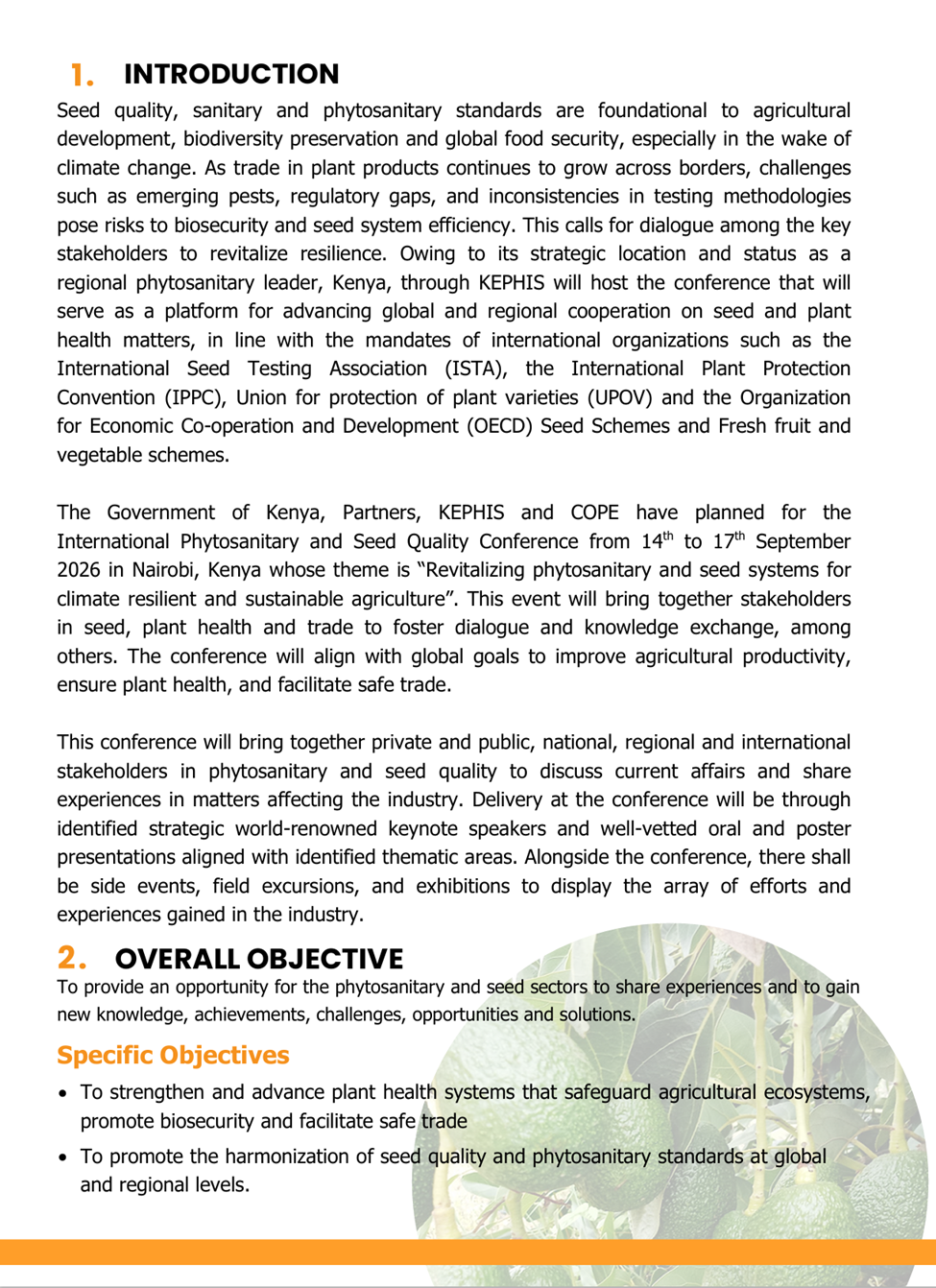
Seed quality, phytosanitary and food safety standards are foundational to agricultural development and global food security, especially in the wake of climate change. As crossborder trade in plants and plant products grows, challenges such as emerging pests, regulatory gaps, and inconsistencies in testing methodologies threaten biosecurity and seed system efficiency. The event organizing committee invites researchers, policymakers, and industry stakeholders to submit abstracts for oral or poster presentations.
Theme “ Revitalizing Phytosanitary and Seed Systems for Climate Resilient and
Sustainable Agriculture”
- Plant health and food safety systems: Managing risks and protecting plant resources
- Safe trade and market access for plants, plant products and regulated articles
- Seed quality, variety development, registration and associated systems
- Policy and regulatory frameworks for food safety, plant health and seed quality assurance
- Cross cutting issues in plant health, food safety and seed quality assurance
Keynote Speakers
Inspiring talks from global leaders in agricultural research and policy.
Breakout Sessions
Thematic sessions for in-depth discussion of specific research areas.
Side Events
Sessions that focus on specific topics, offering participants extra opportunities for discussion and networking alongside the main programme.
Poster Sessions
Visual presentation of research findings with interactive discussions.
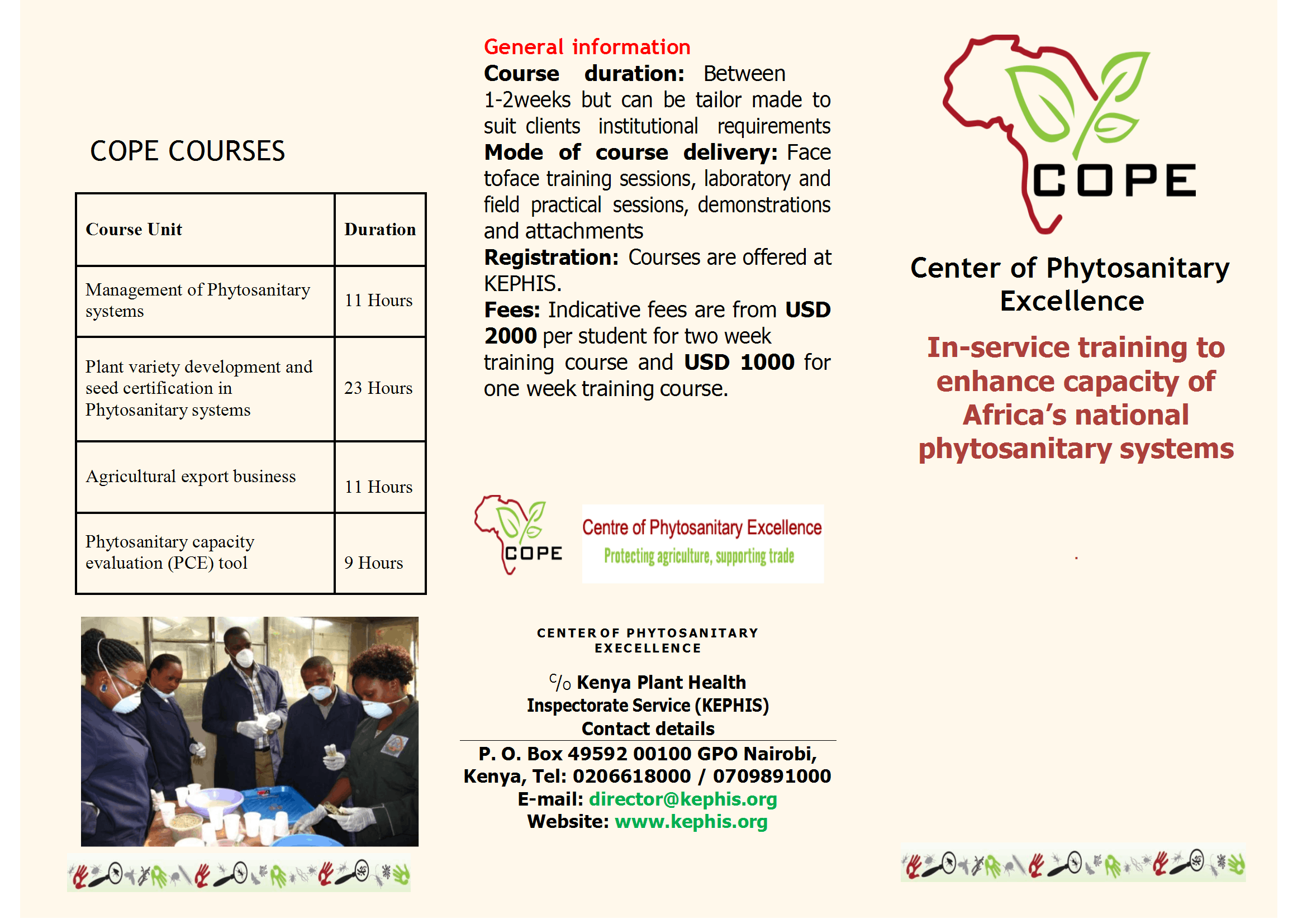
COPE Brochure
The Centre of Phytosanitary Excellence training brochure outlines its capacity-building programmes focused on strengthening plant health systems and phytosanitary services. It highlights practical training in areas such as pest diagnosis, seed systems, quarantine procedures, and laboratory practices, aimed at supporting professionals in agriculture, research, and regulatory agencies. The brochure positions the institution as a key hub for improving phytosanitary competence and promoting sustainable, climate-resilient agriculture.
Single Registration
4th Phytosanitary Conference - 2023
KEPHIS is spearheading activities to mark the International Year of Plant Health (2023/2024) in Kenya. KEPHIS and COPE have organized a virtual 4th Phytosanitary Conference from 18th to 21st September 2023 in Nairobi, Kenya. The theme of the conference is “Enhancing Phytosanitary Systems for Healthy Plants, Safe and Sustainable Trade”. This Conference will be in line with the celebrations of the International Year of Plant Health in 2023/2024.
CONFERENCE REGISTRATION FEES (to include abstract book, conference proceedings and current phytosanitary journal)
The bank deposit slip should be scanned and forwarded to the email: This email address is being protected from spambots. You need JavaScript enabled to view it.. Registration confirmation/receipt and further information will be emailed to you upon receipt.
If you have any questions, please call e-mail the conference secretariat on: This email address is being protected from spambots. You need JavaScript enabled to view it. or This email address is being protected from spambots. You need JavaScript enabled to view it.
Event Information
| Event Date | 09-18-2023 |
| Event End Date | 09-21-2023 |
| Capacity | Unlimited |
| Registered | 253 |
| Cut off date | 09-21-2023 |
| Individual Price | Students: US$ 150 | Corporate Delegate (Maximum Three Participants) US$ 750 |
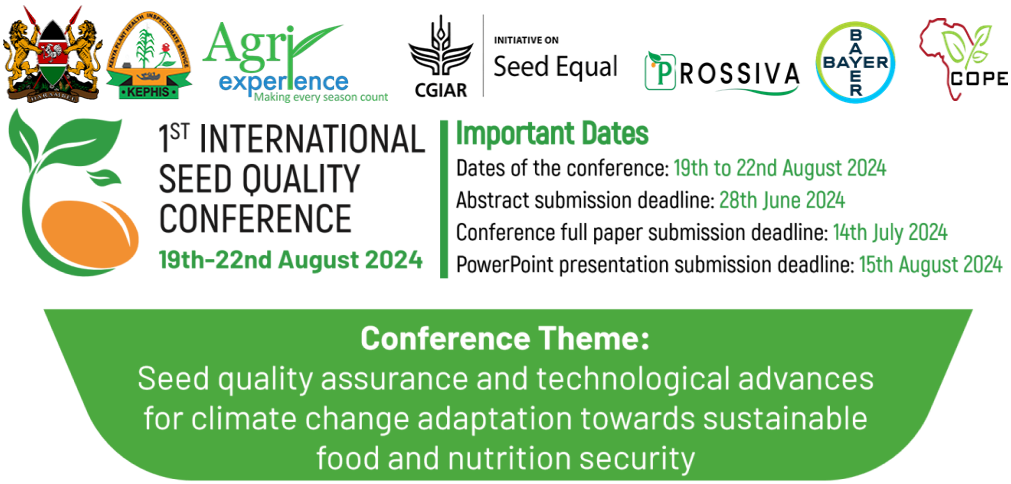
The 1st International Seed Conference







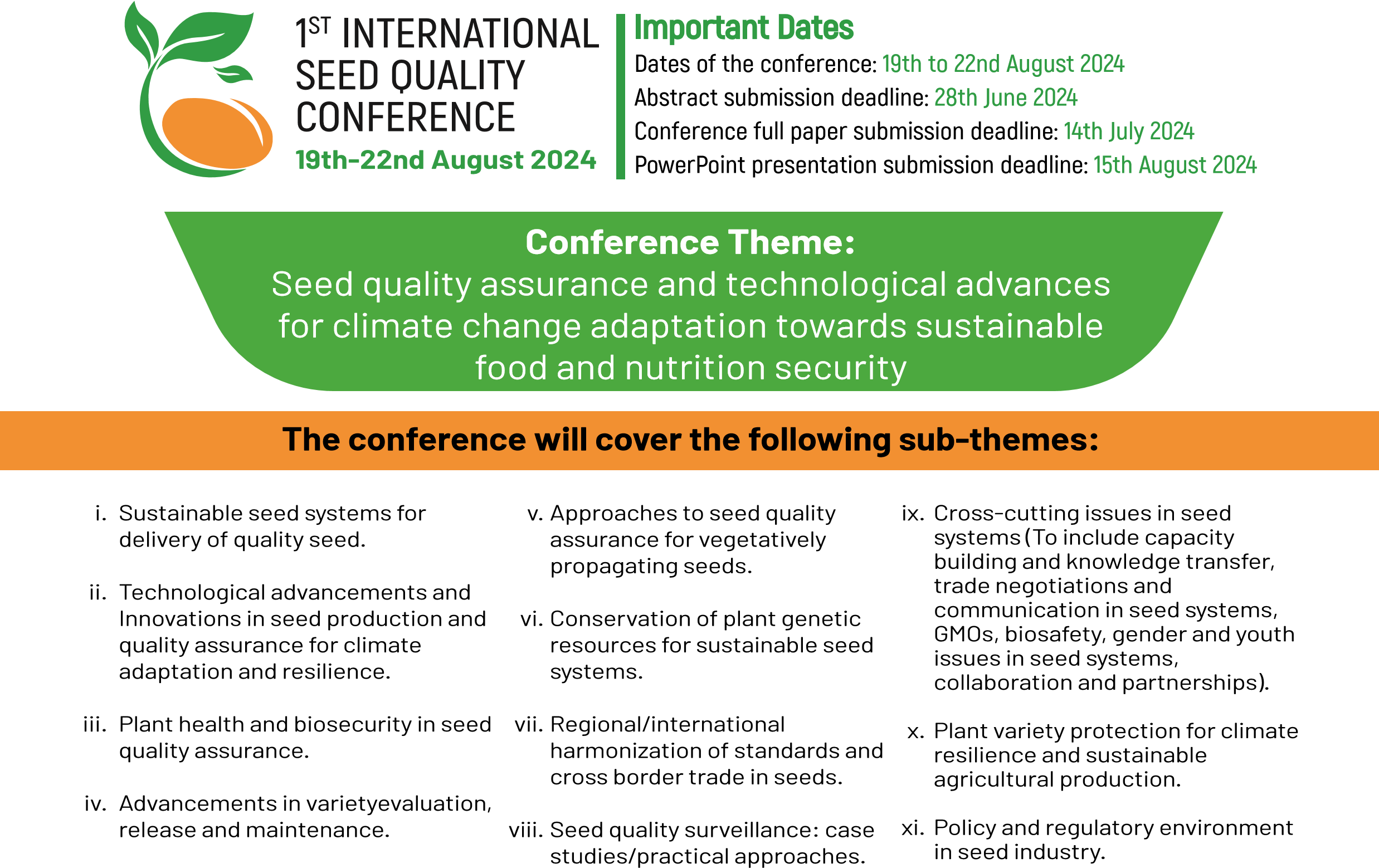
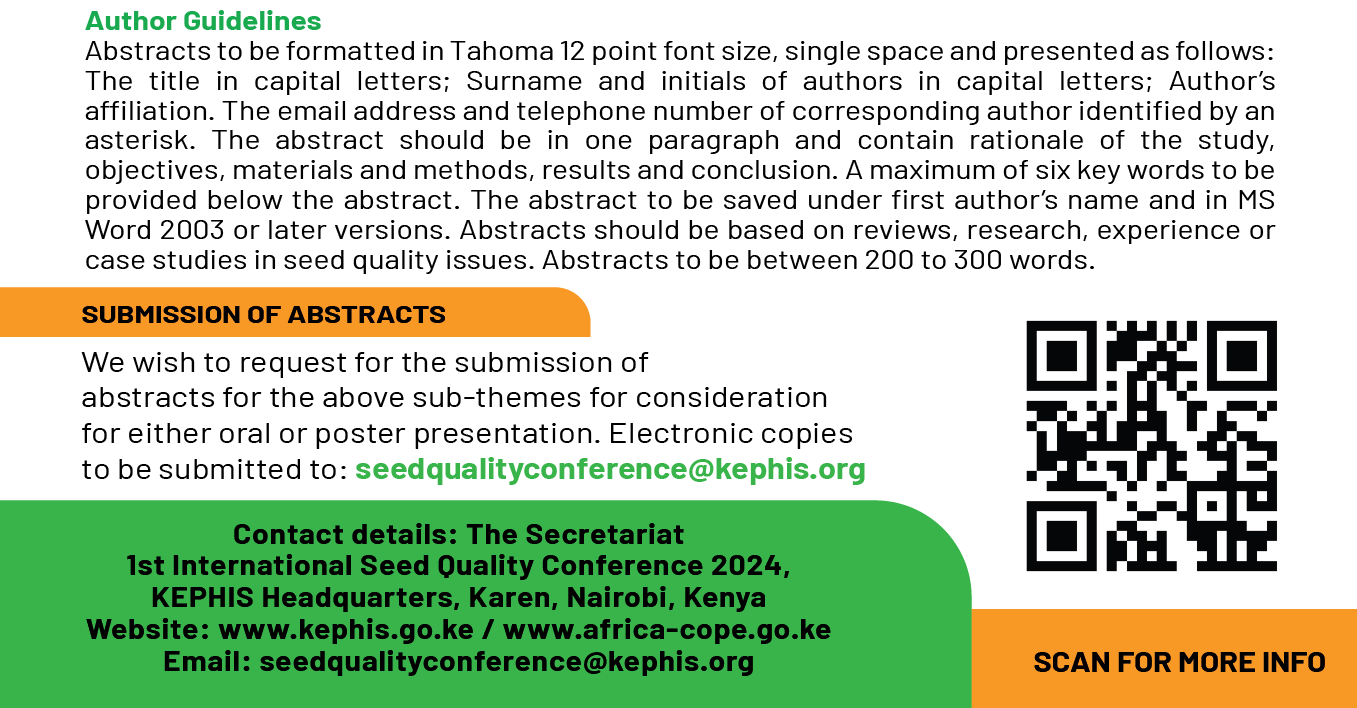
Call for Abstracts
THE 3rd INTERNATIONAL PHYTOSANITARY CONFERENCE 2021 (Virtual Edition)
13th to 16th September 2021; KEPHIS, Nairobi, Kenya
Important Dates:
Dates of the conference: 13th to 16th September 2021
Abstract submission deadline: 15th August 2021
Conference full paper submission deadline: 31st August 2021
Overall Theme of the Conference:
"Enhancing Phytosanitary Systems for Healthy Plants, Safe and Sustainable Trade"
The scope of this conference will cover the following sub-themes:
- International Year of Plant Health
- Pest Surveillance in Phytosanitary Systems
- Import control and Quarantine Regulations
- Pest diagnostics in phytosanitary systems
- Export certification in phytosanitary systems
- Emerging innovationPhytosanitary systems
- Industry role in the implementation of successful phytosanitary systems
- Capacity building, regulatory framework, trade negotiations, and communication in phytosanitary systems
DOWNLOAD GUIDELINES FOR ABSTRACT WRITING